How to Prepare for a Job Interview (2026 Guide)
Last updated: 18 April 2026
Job interviews are stressful. You know you need to make a good impression, but you're not sure exactly how to prepare or what they'll ask.
This guide covers practical steps before, during, and after an interview so you can show up prepared in 2026.
If you are still trying to get interviews, use the CV guide first. If the interview involves travel, clothing, or unpaid time off, check the budget calculator so preparation costs do not surprise you.
If you are tailoring a CV before sending the next application, read the CV tailoring tool page so the final version stays clear, relevant, and truthful.
Research the company
Most candidates skip this step or do it half-heartedly. That's a mistake. Employers can tell when you haven't bothered to learn about them, and it shows you're not genuinely interested in the role.
What to research:
- What the company does (products, services, who they serve)
- Recent news or achievements (check their website news section or Google News)
- Company culture and values (look at their About page and social media)
- Who will interview you (check LinkedIn if you know their name)
- The specific role you're applying for (re-read the job description carefully)
You don't need to memorize their entire history. Spend 15-20 minutes reading their website and recent news. That's enough to show you've done basic homework.
How to use this research:
When they ask "Why do you want to work here?" or "What do you know about us?", you can mention something specific you learned. This immediately sets you apart from candidates who give generic answers.
Example: "I saw that you recently expanded into sustainable packaging, which aligns with my interest in environmental responsibility. I'm excited about the opportunity to contribute to that initiative."
Prepare answers to common questions
Most interviews include the same core questions. Prepare answers in advance so you're not scrambling during the interview.
Questions you should always prepare for:
- "Tell me about yourself"
- "Why do you want this job?"
- "What are your strengths?"
- "What are your weaknesses?"
- "Where do you see yourself in five years?"
- "Why should we hire you?"
- "Tell me about a time you faced a challenge and how you handled it"
- "Do you have any questions for us?"
How to answer "Tell me about yourself":
This is usually the first question. Keep it short (60-90 seconds) and focus on your professional background, not your life story.
Structure: Brief background -> Relevant experience -> Why you're interested in this role.
Example: "I've worked in customer service for three years, most recently at [Company] where I handled 50+ customer inquiries daily and maintained a 94% satisfaction rating. I'm looking to move into a role with more responsibility, and this position appeals to me because it combines customer interaction with team leadership, which is where I want to develop my career."
How to answer "What are your weaknesses?":
Don't say "I'm a perfectionist" or "I work too hard." Employers see through this immediately.
Pick a real weakness that's not critical to the job, then explain what you're doing to improve it.
Example: "I sometimes struggle with public speaking, which is why I joined a local Toastmasters group six months ago. I've already noticed improvement in my confidence when presenting to groups."
This shows self-awareness and initiative to improve.
Practice speaking out loud
Thinking about your answers is not the same as saying them out loud. Your brain works differently when you speak versus when you think.
How to practice:
- Stand in front of a mirror and answer common questions out loud
- Record yourself on your phone and listen back (you'll notice filler words like "um" and "like")
- Ask a friend or family member to do a mock interview with you
- Practice until your answers sound natural, not rehearsed
You don't want to memorize answers word-for-word. You want to know the key points you'll cover so you can speak confidently without long pauses or rambling.
24-hour interview prep plan
If the interview is tomorrow, keep the prep focused:
- Read the job description and underline the 5 most important requirements.
- Prepare 3 examples: one teamwork example, one problem-solving example, and one reliability example.
- Write 3 questions for the interviewer that are not answered on the company website.
- Check route, video link, documents, clothing, and start time before going to sleep.
- Send a brief thank-you email within 24 hours after the interview.
Plan what to wear
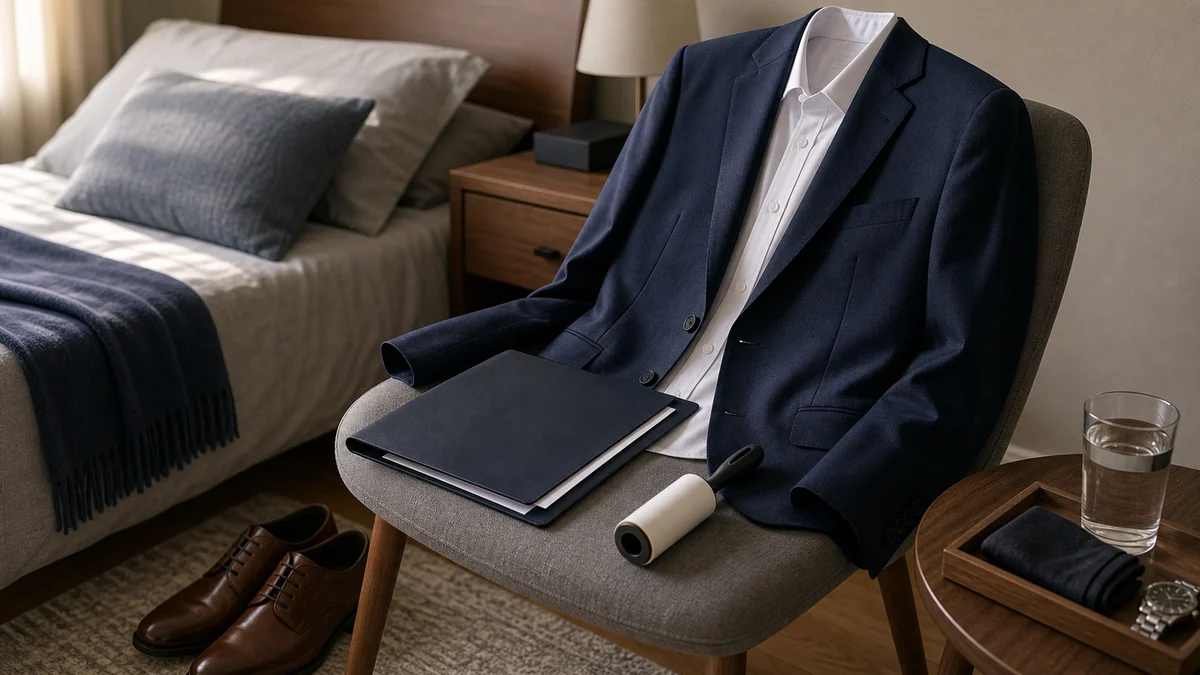
Your appearance matters. Fair or not, people make judgments based on how you present yourself.
General rule: Dress one level more formal than the company's everyday dress code.
- Corporate office -> Full suit
- Business casual office -> Smart trousers/skirt and button-up shirt or blouse
- Casual workplace -> Clean, neat casual clothes (no jeans with holes, no trainers)
When in doubt, slightly overdress. It's better to be too formal than too casual.
Other appearance tips:
- Make sure clothes are clean, ironed, and fit properly
- Shoes should be clean and in good condition
- Keep jewelry and accessories minimal
- Hair should be neat and tidy
- Go easy on perfume or cologne (some people are sensitive to strong scents)
For video interviews, dress professionally from the waist up at minimum. But honestly, dress fully professional anyway - it puts you in the right mindset.
Arrive early
Plan to arrive 10-15 minutes before your scheduled interview time. Not 30 minutes early (that's awkward for them), and definitely not late.
For in-person interviews:
- Check the route the day before
- Add 15 minutes to your expected travel time for delays
- If you arrive very early, wait in your car or a nearby cafe until 10 minutes before
- Turn off your phone before entering the building
For video interviews:
- Test your camera, microphone, and internet connection 30 minutes before
- Choose a quiet location with a neutral background
- Make sure the room is well-lit (natural light from a window works best)
- Close all other programs and browser tabs to avoid notifications
- Log in 5 minutes early and wait for them to join
Bring essentials
What to bring to an in-person interview:
- Multiple copies of your CV (even if they already have it)
- A notepad and pen (for taking notes during the interview)
- A list of references (if they ask for them)
- Portfolio or work samples (if relevant to your field)
- A bottle of water (in case your mouth gets dry)
Keep everything in a professional-looking folder or bag, not a plastic carrier bag.
Ask questions at the end
When they ask "Do you have any questions for us?", never say no. This is your chance to show genuine interest and learn if the job is right for you.
Good questions to ask:
- "What does a typical day look like in this role?"
- "What are the biggest challenges facing the team right now?"
- "How would you describe the company culture?"
- "What opportunities are there for professional development?"
- "What are the next steps in the hiring process?"
Questions to avoid:
- Anything about salary or benefits in the first interview (wait until they bring it up or until a second interview)
- Questions that are clearly answered on their website
- "What does this company do?" (you should already know this)
Prepare 3-4 questions in advance. Some might get answered during the interview, so having extras ensures you always have something to ask.
Follow up after the interview
Send a thank-you email within 24 hours of your interview. Most candidates don't do this, which makes you stand out.
What to include:
- Thank them for their time
- Mention something specific from the conversation
- Restate your interest in the role
- Keep it brief (3-4 sentences maximum)
Example:
"Thank you for taking the time to meet with me today. I enjoyed learning more about the customer service team and the new CRM system you're implementing. The role sounds like an excellent fit for my skills and experience, and I'm very interested in joining your team. Please let me know if you need any additional information from me."
Send this to the person who interviewed you. If you don't have their email, send it to the HR contact who arranged the interview and ask them to pass it along.
Stay calm and be yourself
Interviews are nerve-wracking. That's normal. But remember: they invited you to interview because they think you might be a good fit. They want you to succeed.
Tips for managing nerves:
- Take deep breaths before entering the room or logging into the video call
- Smile and make eye contact (it helps you appear confident even if you don't feel it)
- Speak slowly and clearly (nerves make people rush their words)
- It's okay to pause and think before answering a question
- If you don't understand a question, ask them to clarify
Don't try to be someone you're not. Employers can tell when you're being fake, and even if you get the job, you'll be miserable if you have to pretend to be someone else every day.
Be professional, but be yourself.
Final thoughts
Interview preparation isn't about memorizing perfect answers. It's about:
- Researching the company so you can speak intelligently about them
- Preparing answers to common questions so you're not caught off guard
- Practicing out loud so you sound confident
- Dressing appropriately and arriving on time
- Asking thoughtful questions
- Following up with a thank-you email
Do these things and you'll be better prepared than 80% of other candidates.
You might still not get the job - sometimes there's a better-qualified candidate, an internal hire, or a hiring freeze. That's not always a reflection on you.
But if you prepare properly, you give yourself the best possible chance. And each interview makes you better at the next one.
Keep applying, keep interviewing, and keep improving your process.
Next step
If you are still trying to get interviews, go back to the career hub or review the focused job-search guide for application volume and follow-up steps.
Related reading
How to Write a CV That Gets Interviews in 2026
Modern CV structure, formatting tips, and what employers actually look for when screening applications in today's job market.
How to Get a Job Fast (2026 Guide)
Practical ways to speed up a job search in 2026, including fast-hiring industries, direct applications, local leads, and focused follow-up.